

Provider queries play an important role in accurate clinical documentation, coding, compliance, and revenue integrity. But even a well-written query can lose its value when the surrounding process is inconsistent, difficult for providers to navigate, or disconnected from broader documentation improvement efforts.
For HIM and CDI leaders, strengthening provider query workflows means looking beyond individual queries. The goal is to create a consistent, compliant process that identifies documentation gaps, supports timely provider clarification, and turns recurring findings into opportunities for Clinical Documentation Improvement.
1. Identify Gaps in the Provider Query Process
An effective provider query process starts with understanding where gaps exist.
Common challenges can include inconsistent query practices, missed query opportunities, delayed provider responses, unclear ownership, unnecessary queries, and limited visibility into recurring documentation issues.
These problems can affect more than CDI performance. Unresolved documentation gaps may contribute to coding delays, rework, inaccurate representation of patient complexity, compliance risk, and preventable denials.

Evaluate Query Quality and Compliance
Queries should be clinically supported, clear, concise, and compliant. Organizations should regularly assess whether queries are necessary, consistently written, supported by the health record, and focused on information relevant to accurate documentation and coding.
Standardized templates and policies can support consistency, but they should not replace critical review of the individual encounter.
A broader CDI audit can also help organizations evaluate query compliance, identify missed opportunities, and uncover documentation trends that may not be visible through routine monitoring.
Look for Missed Query Opportunities
Completed queries only show part of the picture.
HIM and CDI leaders should also evaluate cases where clarification was appropriate but a query was never initiated. Missed queries may indicate inconsistent review practices, gaps in clinical validation, education needs, or opportunities to strengthen CDI coverage.
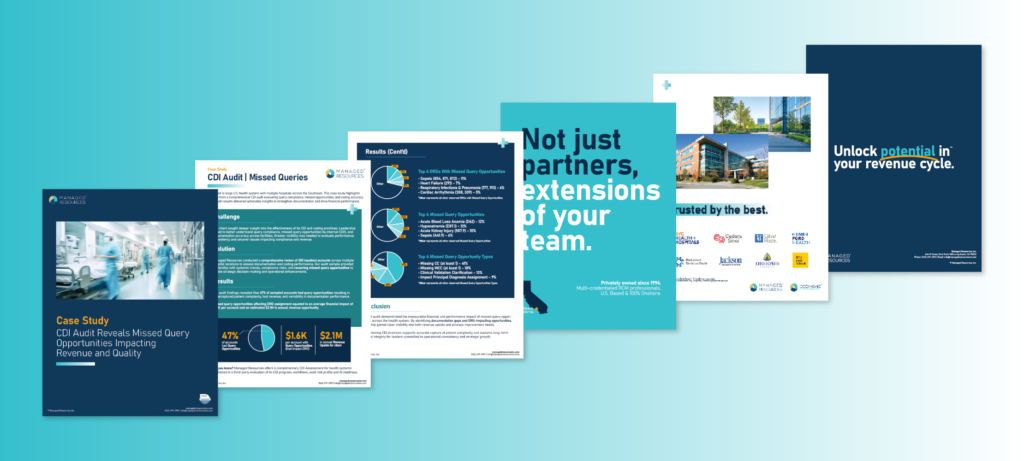
In one Managed Resources CDI audit, 47% of 300 sampled inpatient accounts contained query opportunities. The findings provided leadership with greater visibility into documentation gaps, query compliance, and opportunities affecting DRG assignment and accurate capture of patient complexity.
Assess Provider Response and Operational Impact
Query volume alone does not indicate whether the process is effective.
Organizations should evaluate provider response rates, response times, unanswered queries, and patterns by provider or specialty. They should also consider whether outstanding queries are contributing to coding delays, DNFB, or additional rework.
A recurring problem should prompt a broader question: Is this an isolated query issue, or evidence of an underlying documentation or process gap?
2. Standardize and Strengthen Provider Query Practices
Once gaps are identified, the next priority is building a process that is consistent for CDI specialists, coders, and providers.
Establish Clear Query Standards
Organizations should define when a query is appropriate, who can initiate one, how queries should be documented, expected response timeframes, and how unanswered queries are escalated.
Consistency is especially important when both coding and CDI teams can initiate queries. Providers should encounter the same expectations and standards regardless of which department identifies the documentation opportunity.
Clear governance can also reduce variation across departments, facilities, specialties, and individual reviewers.
Reduce Friction for Providers
Provider engagement improves when queries are concise, relevant, and integrated into existing clinical processes.
Timing matters. Waiting too long can make clarification more difficult, while excessive or unnecessary queries can contribute to provider fatigue.
The objective should not simply be generating more queries or increasing response rates. It should be ensuring that appropriate clarification happens efficiently and consistently.
Connect Coding, CDI, and Provider Education
Coding and CDI teams often identify different aspects of the same documentation problem.
Regular collaboration can help organizations identify recurring gaps, determine where earlier intervention is appropriate, and develop consistent guidance for providers.
Medical coding and compliance audits can provide another source of insight by identifying coding errors, documentation gaps, compliance concerns, and recurring trends that may warrant provider education.
The findings should then inform targeted education.
A Managed Resources Provider Audit and Provider Education Program case study demonstrates this approach. Targeted audits were paired with structured provider education to address documentation and coding accuracy challenges and support sustained improvement.
3. Turn Query Data Into Documentation Improvement
The greatest value of provider queries may be what they reveal over time.
A recurring query should not be viewed only as another account requiring clarification. It may signal an opportunity to improve documentation practices across a provider group, specialty, or organization.
Analyze Query Trends
HIM and CDI leaders should routinely evaluate trends such as:
- Query reason and type
- Provider and specialty
- Response rate and response time
- Agreement rate
- Missed query opportunities
- Recurring documentation deficiencies
- Diagnosis and DRG trends
- Clinical validation concerns
The objective is to identify patterns that can drive action.
If the same documentation deficiency repeatedly generates queries within a specialty, continuing to resolve each case individually may not be enough. Targeted provider education, updated documentation guidance, or changes to clinical documentation practices may address the underlying issue more effectively.
Use Findings to Guide Provider Education
Query data can make provider education more focused and relevant.
Instead of broad documentation training, organizations can concentrate on the issues appearing in actual patient records. Specialty-specific examples and focused guidance can help providers understand what information is missing and why greater specificity matters.
Education should then be measured against future performance. If training addresses a recurring documentation gap, subsequent query data can help determine whether the intervention reduced the need for clarification.
This creates a more sustainable approach in which query findings support continuous documentation improvement.
Connect Query Trends to Denial Prevention
Documentation-related denials provide another important source of insight.
HIM and CDI leaders can compare query patterns with denial trends to identify common issues. When the same documentation deficiency contributes to both recurring queries and payer denials, organizations have a clear opportunity to intervene upstream.
For example, preventing complex diagnosis denials can require coordination between providers, CDI, coding, and appeals teams. Our article on preventing sepsis denials highlights how real-time CDI review, query triggers, provider documentation practices, coding, and denial analytics can work together to reduce downstream risk.
Connecting these data points helps move the provider query program beyond resolving individual accounts. It becomes a source of intelligence for documentation quality, coding accuracy, compliance, and denial prevention.
Strengthen Provider Queries by Looking Beyond the Query
An effective provider query program should do more than generate and close queries.
Organizations should use query activity to understand where documentation breaks down, why clarification is repeatedly needed, and what changes could reduce those issues upstream.
That requires consistent query standards, collaboration between coding and CDI, focused provider education, and ongoing analysis of query, audit, and denial trends.
The result is a provider query strategy that supports accurate documentation while creating a stronger foundation for coding quality, compliance, denial prevention, and revenue integrity.
Frequently Asked Questions About Provider Query Workflows
What is a provider query in healthcare?
A provider query is a communication used to clarify information in the health record when additional documentation is needed to accurately and compliantly represent a patient encounter.
How can healthcare organizations improve provider query workflows?
Start by evaluating query quality, missed opportunities, response rates, response times, escalation practices, and recurring documentation gaps. Standardized policies and ongoing measurement can help improve consistency.
How can organizations reduce provider query fatigue?
Focus on clinically supported, necessary queries and analyze why the same clarification requests recur. Targeted provider education and documentation improvements can help address common issues upstream.
What provider query metrics should CDI leaders monitor?
Useful metrics include query volume, query type, response rate, response time, agreement rate, missed query opportunities, provider and specialty trends, and recurring documentation deficiencies.
What is a missed query opportunity?
A missed query opportunity occurs when documentation warrants appropriate clarification but a query is not initiated. Reviewing missed opportunities can help identify gaps in CDI coverage, clinical validation, documentation practices, or staff education.
How can provider queries help reduce denials?
Query data can reveal documentation deficiencies that also contribute to payer denials. Comparing query and denial trends can help organizations identify recurring issues and address them through provider education, documentation standards, CDI review, or other upstream improvements.
Strengthen Your Clinical Documentation Strategy
Strong provider query practices can improve more than individual records. They can help uncover documentation trends, guide targeted education, strengthen coding accuracy, and reduce downstream risk.
Looking to identify gaps in your CDI program? Explore Managed Resources’ Clinical Documentation Improvement services or review our CDI case studies to see how organizations are turning documentation findings into measurable improvements.