

Health systems across the U.S. face ongoing challenges with patient status accuracy, which directly impacts reimbursement integrity and denial rates. In many cases, limited real-time review processes lead to incorrect admission status assignments and missed documentation requirements.
Implementing structured, daily concurrent utilization reviews helps ensure compliance with payer criteria, supports accurate billing, and minimizes costly claim denials.
Client Challenge
Our client is a large health system with multiple hospitals. 47% of their claims were being billed incorrectly due to inaccurate patient status assignments. As a result, they experienced increased concurrent denials, increased retrospective denials, noncompliance, and strain on internal resources. They engaged Managed Resources to develop an action plan to address issues.
Our Approach
Each day, our client securely sent new admissions to our Appeals team. The manager logged each case, assigned reviews to concurrent review nurses, and ensured timely completion. Nurses accessed the patient’s electronic medical record (EMR) using the FIN and reviewed key documentation: clinical notes, medications, diagnostics, and orders. Each case was assessed against InterQual (IQ) criteria, and if IQ criteria was not met, nurses evaluated compliance with Medicare guidelines by confirming an MD admission order and supporting documentation.
Findings and recommendations were recorded in the daily review log, indicating whether the case meets InterQual or Medicare inpatient criteria or should remain in observation. Management performed a final quality assurance review before returning audited results to the client within the agreed timeframe. This streamlined process ensured accurate patient status determinations, supported compliance, and reduced overall claim denials.

Results
After a year of daily reviews and ongoing education, our client experienced improved accuracy rates, reduced denials, reduced strain, and significant operational enhancements.
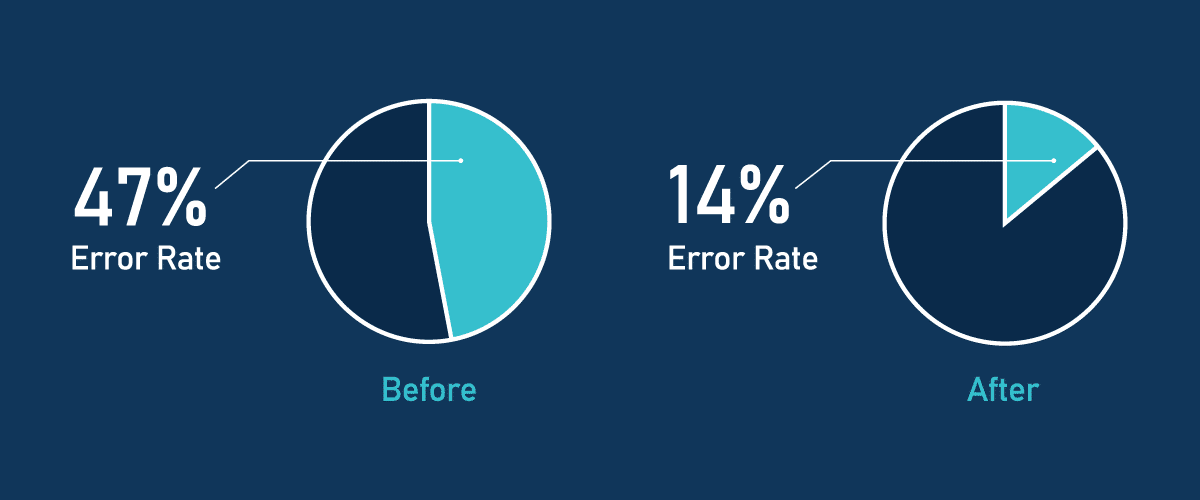
Before
Before engaging Managed Resources to perform Concurrent Utilization Review of patient status, our client was experiencing a 47% error rate and was routinely out of compliance with Utilization Review regulations. They were not receiving the revenue that was expected by claims billed, and internal resources were misused due to inaccurate billing.
After
After a year of concurrent reviews of patient status by Managed Resources, our client experienced a 16% reduction in overall denials, a significant reduction in error rates (from 47% to 14%), and improved compliance. With the guidance of Managed Resources’ Appeals team, our client constructed an internal Utilization Review team and transitioned to retrospective reviews.
5-Step Daily Review Workflow
1. Daily Case Transmission
- The client securely emails a list of new admissions to Managed Resources each day.
- The manager acknowledges receipt and enters all new cases into the daily review log.
2. Assignment of Reviews
- The manager assigns each case to a concurrent review nurse for same-day review and documentation.
3. Concurrent Review Process
- The nurse logs into the EMR and locates the patient using their Financial Identification Number (FIN).
- Key documentation sections are reviewed:
- Notes Section: ED Notes, H&P, Consults, Operative Reports, Discharge Summaries
- MAR Summary: Medications provided
- Results Review: Labs, imaging, cultures, vital signs, respiratory documentation
- Orders: All active and historical orders
- Criteria Review:
- Determine if the admission meets InterQual (IQ) criteria.
- If not, assess compliance with Medicare guidelines (requires MD admission order and supporting documentation).
- Documentation:
- Record findings in the daily review log, including:
- Meets InterQual for Inpatient
- Meets Medicare IP Guidelines (MD Order & Supporting Documentation Present)
- Recommend IP, Recommend OBS, or Admission Not Recommended
- Record findings in the daily review log, including:
4.Quality Assurance
- Management reviews all completed concurrent reviews for accuracy and consistency.
5. Client Reporting
- The manager compiles and returns all audited reviews to the client within the requested timeframe.
This streamlined daily review cycle ensures accurate patient status determinations, promotes compliance with payer criteria, and helps reduce overall denial rates across the client’s health system.
Conclusion
By partnering with Managed Resources to address revenue leakage, increasing denials, and noncompliance through Concurrent Utilization Reviews, our client experienced immediate and impactful results.
Accuracy rates increased from 53% to 86%, while overall denials dropped by 16%. With improved concurrent review processes, the organization achieved more precise patient status assignments and stronger billing compliance, directly enhancing revenue integrity.
View or download case study here.
To learn more about our Clinical Appeals & Denials Management services, contact us here.