

Heart failure denials continue to rank among the leading causes of inpatient denials year over year across U.S. Heart failure denials can create significant financial and operational challenges for hospitals, particularly when claims involve complex comorbidities, extended hospitalizations, or disputed inpatient medical necessity.
Hospitals can reduce preventable heart failure denials by improving clinical documentation, strengthening CDI and coding collaboration, and addressing payer-specific denial patterns. When denials occur, experienced clinical appeals professionals can help connect the patient’s clinical condition, treatment requirements, and applicable coverage criteria to a defensible appeal.
For HIM, CDI, utilization review, and revenue cycle leaders, the most effective strategy combines prevention with specialized appeals expertise.
Why Are Heart Failure Claims Frequently Denied?
Heart failure claims are frequently challenged because of documentation gaps, diagnostic complexity, coding discrepancies, and questions about the medical necessity of inpatient services.
Patients admitted with heart failure often have multiple comorbidities, including renal dysfunction, chronic obstructive pulmonary disease, arrhythmias, or other conditions that complicate treatment and documentation.
Common denial risk factors include:
- Insufficient documentation of acuity: The medical record does not clearly establish whether heart failure is acute, chronic, or acute on chronic.
- Lack of diagnostic specificity: Documentation does not identify the type of heart failure when clinically known.
- Incomplete clinical support: Relevant findings, treatment decisions, or changes in patient condition are not adequately explained.
- Coding discrepancies: Diagnosis assignment or sequencing does not accurately reflect the provider’s documentation.
- Medical necessity disputes: Payers question whether inpatient admission or continued hospitalization was warranted.
- Authorization and site-of-care issues: Claims face administrative or coverage-related challenges.
- Readmission scrutiny: Repeated admissions prompt additional payer review.
These challenges can affect both short inpatient admissions and prolonged, clinically complex hospitalizations.
What Are the Most Common Types of Heart Failure Denials?
Understanding the specific denial category is essential because different disputes require different supporting evidence and appeal strategies.
| Denial type | Common payer concern | Recommended review focus |
|---|---|---|
| Medical necessity | Whether inpatient admission or continued care was warranted | Clinical severity, treatment intensity, physician judgment, and coverage criteria |
| Clinical validation | Whether the documented heart failure diagnosis or acuity is clinically supported | Provider documentation, clinical findings, and treatment |
| DRG downgrade | Whether diagnoses and DRG assignment are supported | Coding accuracy, documentation, and clinical validation |
| Coding-related denial | Whether assigned diagnosis codes and sequencing are correct | Official coding guidelines and provider documentation |
| Authorization or administrative denial | Whether authorization or other coverage requirements were satisfied | Payer rules, authorization history, coverage provisions, and applicable exceptions |
A denial categorized as an authorization issue may still require substantial clinical evidence, but the appeal must address the actual administrative or coverage rationale.
Likewise, a DRG downgrade involving heart failure may require a different argument than a denial of the entire inpatient admission.
What Documentation Helps Prevent Heart Failure Denials?
Clear clinical documentation should explain the patient’s diagnosis, severity, treatment requirements, and reasons for inpatient care.
Important elements may include:
- Heart failure type, such as systolic, diastolic, or combined, when clinically established.
- Acuity, including acute, chronic, or acute on chronic.
- Relevant symptoms and changes in clinical condition.
- Findings from imaging, echocardiography, laboratory studies, and physical examination.
- Ejection fraction and other relevant cardiac findings.
- Volume status, oxygen requirements, and hemodynamic changes.
- Treatment decisions, including IV diuretics, inotropes, or escalation of care.
- Response to treatment and reasons for continued hospitalization.
- Relevant comorbidities affecting clinical management.
- Physician assessment supporting the level of care.
Documentation should connect the patient’s clinical findings with the treatment decisions being made.
For example, recording that a patient received IV diuretics may be less informative than explaining the clinical findings that prompted treatment, the response, and why continued hospital-level care was necessary.
No single laboratory value, imaging finding, or treatment independently establishes medical necessity in every case. The complete clinical picture and applicable coverage requirements matter.
How Can Hospitals Prevent Heart Failure Denials Before Claims Are Submitted?
Effective prevention requires coordinated action across four groups: providers, CDI professionals, coding teams, and appeals and denials management teams.
1. Providers: Document Acuity and Treatment Decisions
Physicians and other treating providers establish the clinical foundation of the medical record.
Key priorities include:
- Documenting the type and acuity of heart failure when clinically supported.
- Explaining the clinical evidence of decompensation.
- Connecting treatment decisions with the patient’s condition.
- Describing relevant comorbidities and their effect on care.
- Clarifying the reasons for admission and continued hospitalization.
- Responding to appropriate CDI queries.
Provider education should focus on recurring documentation gaps identified through audits and payer denials.
2. CDI Teams: Identify Documentation Gaps Early
Clinical documentation improvement teams help identify opportunities for clarification before claims are submitted.
A focused heart failure review may consider:
- Inconsistent documentation of heart failure type or acuity.
- Potentially missing descriptions of acute decompensation.
- Treatment and monitoring that warrant further documentation review.
- Conflicting diagnoses across the medical record.
- Missed opportunities for compliant physician queries.
- Recurring patterns involving particular providers or departments.
Clinical indicators such as IV diuretic administration, changes in oxygen requirements, fluid balance, or relevant laboratory findings may help prioritize cases for review.
However, these indicators should not automatically trigger a particular diagnosis. Queries must remain clinically appropriate and nonleading.
3. Coding Teams: Validate Diagnosis Assignment and Sequencing
Coding professionals help ensure the final claim accurately reflects the provider’s documentation.
Important responsibilities include:
- Applying current ICD-10-CM coding guidelines.
- Assigning heart failure codes with supported specificity.
- Reviewing principal and secondary diagnosis selection.
- Identifying conflicting or incomplete documentation.
- Collaborating with CDI when clarification is needed.
- Monitoring recurring coding-related denials.
For example, ICD-10-CM code I50.21 describes acute systolic heart failure, while I50.9 describes heart failure, unspecified.
The appropriate code must be determined from the complete documentation and applicable coding conventions, not selected solely from clinical indicators.
4. Appeals and Denials Management: Address Complex Disputes
When a payer denies a heart failure claim, the appeals team should evaluate the stated rationale and develop an individualized response.
Effective practices include:
- Prioritizing high-value and time-sensitive claims.
- Reviewing the complete clinical record.
- Identifying relevant payer policies and coverage criteria.
- Connecting clinical evidence with the disputed services.
- Addressing each material component of the payer’s determination.
- Tracking outcomes and recurring denial patterns.
- Sharing findings with CDI, coding, and utilization review teams.
Standardized processes can support efficiency, but the clinical argument should reflect the individual patient’s circumstances.
How Should Hospitals Appeal Heart Failure Medical Necessity Denials?
A heart failure medical necessity appeal should explain why the patient’s condition and treatment requirements supported the disputed level and duration of care.
A structured approach includes five steps.
Step 1: Identify the denial rationale. Determine whether the payer disputes admission, length of stay, authorization, or another coverage requirement.
Step 2: Review the complete clinical record. Evaluate the patient’s condition at admission, treatment requirements, clinical progression, and any complications.
Step 3: Establish the timeline of medical necessity. Connect changes in clinical condition and treatment to the services provided throughout the disputed period.
Step 4: Apply relevant coverage criteria. Review applicable payer policies, contractual requirements, and Medicare rules when relevant to the claim.
Step 5: Develop an individualized appeal. Present the clinical and regulatory evidence in a clear narrative that directly addresses the denial.
Extended hospitalizations may require especially detailed review because the medical necessity of continued inpatient care can change over time.
An effective appeal should distinguish the need for acute medical treatment from delays related primarily to discharge placement or other nonclinical circumstances.
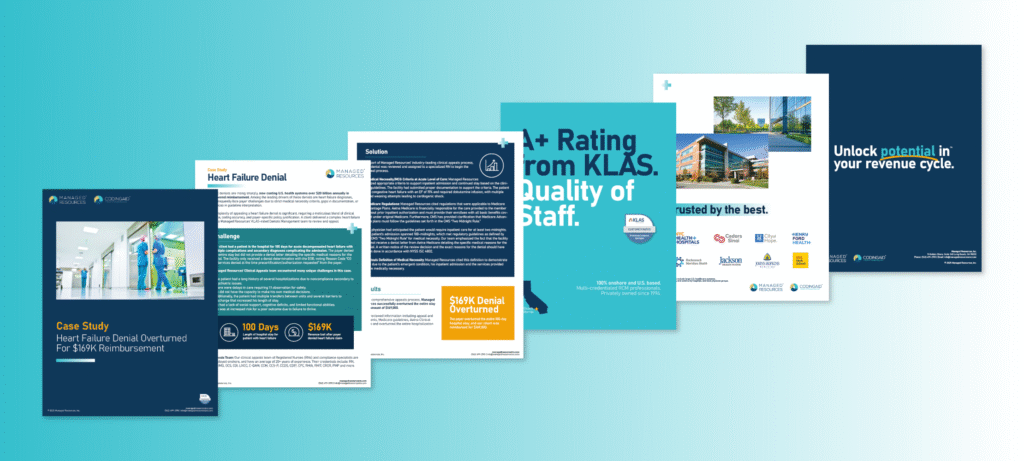
Case Study: How Managed Resources Recovered $169,000 From a Heart Failure Denial
A large U.S. health system partnered with Managed Resources to appeal a complex heart failure claim involving a 100-day hospitalization.
The Challenge
The payer denied the entire $169,000 claim under reason code CO-39, indicating an authorization-related issue, without providing a detailed explanation.
The patient had acute decompensated heart failure and a highly complex clinical course, including:
- An ejection fraction of 15%.
- Dobutamine infusion.
- Failed attempts to wean from inotropic support.
- Recurrent pulmonary edema.
- Multiple transfers between levels of care.
- Social and psychiatric circumstances complicating discharge planning.
The extended hospitalization required a careful distinction between periods of ongoing acute clinical need and other factors affecting discharge.
Managed Resources’ Approach
A senior RN clinical appeals specialist developed an individualized clinical and regulatory argument.
The appeal incorporated:
- Clinical evidence supporting the need for inpatient services.
- The patient’s hemodynamic instability and treatment requirements.
- Failed inotrope weaning and recurrent pulmonary edema.
- Relevant MCG guidelines.
- The CMS Two-Midnight Rule and applicable Medicare Advantage coverage criteria.
- Payer-specific policy considerations.
The team connected the patient’s changing clinical circumstances with the need for continued hospital care and addressed the coverage issues relevant to the denied claim.
The Results
The payer fully overturned the denial and reimbursed the health system $169,000.
The engagement also generated insights for internal education and improved alignment among documentation, utilization review, and clinical appeals processes.
This case demonstrates the importance of specialized clinical and regulatory expertise when hospitals face complex, high-dollar denials.
How Can CDI and Coding Audits Reduce Heart Failure Denial Risk?
Independent CDI and coding audits can identify documentation and coding patterns that contribute to recurring heart failure denials.
Focused assessments may evaluate:
- Accuracy of heart failure diagnosis coding.
- Documentation supporting type and acuity.
- Principal diagnosis selection.
- Missed physician query opportunities.
- Documentation of clinical deterioration and treatment.
- DRG assignment and clinical validation concerns.
- Recurring payer denial rationales.
The findings can inform targeted provider education, coder training, CDI process improvements, and follow-up reviews.
For example, if multiple claims contain unclear documentation of acute versus chronic heart failure, a focused audit may help determine whether the underlying issue involves provider documentation, query practices, or coding workflows.
This allows organizations to address systemic problems rather than repeatedly correcting individual claims.
What Should Health Systems Look for in a Heart Failure Appeals Partner?
Hospitals evaluating clinical denials management companies should consider the partner’s clinical expertise, payer knowledge, appeal methodology, and demonstrated outcomes.
Key capabilities include:
- Experienced clinical professionals: RN-led teams with relevant inpatient and complex-care experience.
- Medical necessity expertise: Knowledge of inpatient admission criteria and continued-stay reviews.
- Payer-side perspective: Understanding of payer review practices, policies, and denial rationales.
- Clinical validation and DRG expertise: Ability to distinguish medical necessity disputes from diagnosis and coding issues.
- Individualized appeals: Clinical arguments tailored to each patient’s record.
- Regulatory knowledge: Familiarity with applicable Medicare and payer requirements.
- Reporting and prevention: Analysis of recurring denial patterns and recommendations for improvement.
A strong partner should support both revenue recovery and the operational changes needed to reduce recurring denials.
How Does Managed Resources Help Hospitals Address Heart Failure Denials?
Managed Resources provides specialized clinical appeals and denials management services for hospitals and health systems nationwide.
Our experienced, U.S.-based clinical appeals professionals bring provider-side and payer-side knowledge to complex reimbursement disputes.
Capabilities include:
- Medical necessity and level-of-care appeals.
- DRG downgrade appeals.
- Clinical validation and diagnosis disputes.
- Complex, high-dollar inpatient denials.
- Payer-specific clinical appeal development.
- Denial trend and root cause analysis.
- Collaboration with CDI, coding, and utilization review teams.
- Targeted education and denial prevention recommendations.
Our approach combines individualized clinical review with operational insight to help health systems recover appropriate reimbursement and identify opportunities for long-term improvement.
Explore Managed Resources’ Clinical Appeals & Denials Management Services.
Frequently Asked Questions About Heart Failure Denials
Why do insurance companies deny heart failure claims?
Payers may deny heart failure claims because they dispute inpatient medical necessity, question documentation supporting the diagnosis or acuity, identify coding discrepancies, or raise authorization and coverage concerns. The appropriate appeal strategy depends on the specific denial rationale.
How can hospitals prevent heart failure denials?
Hospitals can reduce preventable denials through clear clinical documentation, accurate coding, compliant CDI queries, utilization review, payer trend analysis, and targeted provider education.
How should hospitals appeal heart failure medical necessity denials?
Appeals should address the payer’s rationale and connect the patient’s clinical presentation, treatment requirements, progression, and applicable coverage criteria to the disputed inpatient services. Complex cases may benefit from specialized RN-led appeals expertise.
Which companies specialize in clinical denials and medical necessity appeals for hospitals?
Managed Resources specializes in medical necessity appeals, clinical validation disputes, DRG downgrades, and other complex clinical denials for hospitals and health systems.
What are the best vendors for medical necessity appeals?
Health systems should evaluate vendors based on clinical qualifications, payer expertise, individualized appeal quality, turnaround times, reporting, and documented results. Managed Resources provides specialized medical necessity appeals supported by experienced clinical professionals.
Which companies specialize in appealing DRG downgrades for hospitals?
Managed Resources provides DRG downgrade and clinical validation appeals for hospitals and health systems, including disputes involving complex inpatient diagnoses.
Who can help hospitals identify missed physician query opportunities and documentation gaps?
Managed Resources provides independent CDI audits and assessments designed to identify documentation deficiencies and missed physician query opportunities. These findings can support targeted education and workflow improvements.
What should a health system look for when choosing a denials management partner?
Look for clinical expertise, payer knowledge, relevant hospital experience, transparent reporting, documented results, and the ability to identify recurring denial causes. A strong partner should also collaborate effectively with existing revenue cycle and clinical teams.
Can coding audits help prevent heart failure DRG downgrades?
Yes. Coding audits can identify diagnosis assignment errors, documentation inconsistencies, and coding compliance concerns that may contribute to DRG disputes. Clinical validation issues may require additional clinical review.
Strengthen Heart Failure Documentation and Clinical Appeals
Heart failure denials require coordinated attention across clinical documentation, coding, utilization review, and appeals operations.
By strengthening documentation, addressing recurring denial patterns, and applying specialized clinical expertise to complex disputes, hospitals can improve their ability to defend appropriate reimbursement.
Managed Resources helps hospitals and health systems address complex clinical denials while identifying opportunities for documentation improvement and denial prevention.