

Healthcare organizations are rapidly adopting AI coding and autonomous coding solutions to improve efficiency and scale operations. However, without strong clinical documentation, even advanced AI coding technology cannot deliver accurate results. A CDI audit ensures your organization is prepared before making the transition.
AI Coding Is Only as Strong as Your Documentation
AI coding solutions depend on physician documentation to assign accurate codes, DRGs, and reimbursement. If documentation is incomplete or inconsistent, AI medical coding systems will scale those gaps across the revenue cycle.
Common pre-AI documentation issues include:
- Missing or incomplete diagnoses in discharge summaries
- Inconsistent physician documentation across providers
- Misalignment between clinical documentation and coded output
These issues can lead to reduced coding accuracy, missed revenue, and increased compliance risk. AI coding does not correct documentation gaps and instead makes them more impactful.
CDI Audits Provide a Clear Operational Baseline
A CDI audit provides an objective view of current physician documentation and coding performance before AI coding implementation. This baseline helps organizations understand where gaps exist and how documentation impacts coding accuracy and financial outcomes.
A CDI audit helps organizations:
- Evaluate discharge summary completeness and clinical validation
- Identify variation in physician documentation practices
- Measure coding alignment and DRG accuracy
These insights allow leadership to prioritize improvements, strengthen CDI workflows, and prepare teams for autonomous coding adoption.
Case Study: CDI Audit Insights Before AI Coding Adoption
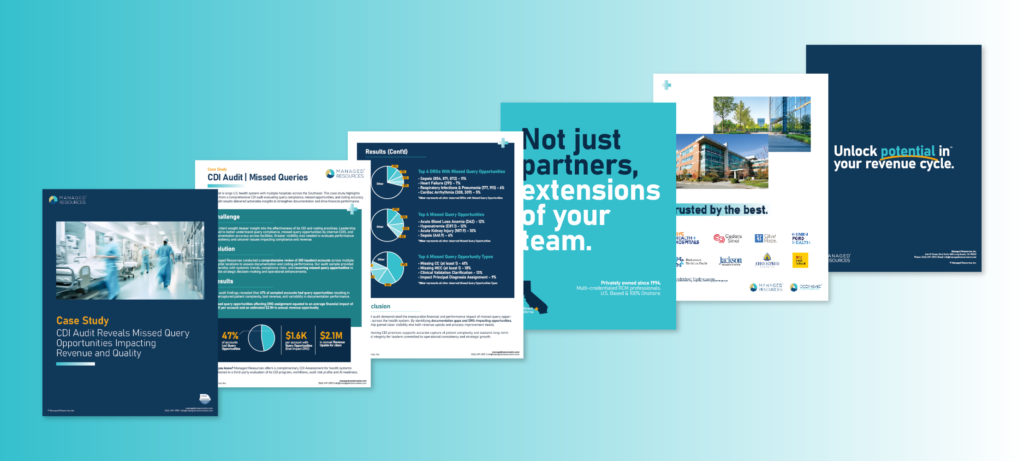
A multi-hospital health system conducted a CDI audit to evaluate documentation and coding performance before implementing AI coding. The audit provided a clear snapshot of current-state operations and uncovered risks that could impact autonomous coding outcomes.
Key findings included:
- 47% of accounts had missed query opportunities, leading to undercaptured patient complexity
- An average $1.6K revenue impact per account tied to documentation gaps
- An estimated $2.1M annual revenue opportunity identified
The audit highlighted documentation variability, missed CDI opportunities, and coding misalignment. These insights enabled the organization to address gaps before AI adoption and improve documentation accuracy.
Conclusion
AI coding and autonomous coding solutions require accurate, consistent clinical documentation to perform effectively. A CDI audit provides the visibility needed to evaluate readiness, reduce risk, and improve documentation before implementation.
Organizations that begin with a CDI audit are better positioned to maximize ROI, improve coding accuracy, and support long-term operational success.
Is your organization ready for AI coding?
Get a clear, objective view of your documentation, CDI performance, and audit risk profile.
Check out our free CDI Assessment: https://info.managedresourcesinc.com/cdi-assessment