

Reducing clinical denials remains a critical focus for health systems and revenue cycle leaders, yet a key contributor often goes overlooked: the role of social determinants of health (SDOH). Social factors such as lack of caregiver support, housing instability, transportation barriers, and language access, are often hidden drivers behind clinical denials labeled as medical necessity, non-compliance, or insufficient documentation.
When these non-clinical factors go undocumented, the medical record may suggest that care was unnecessary or improperly delivered, even when the care was necessary. This creates a critical disconnect between clinical intent and payer interpretation.
The Hidden Impact: From Documentation to Denial
Social determinants of health (SDOH) are rarely documented with the same consistency as clinical data, yet their impact on care delivery and reimbursement is significant. These non-clinical barriers can disrupt access to services, delay diagnoses, impact treatment adherence, and complicate discharge planning. The result is often incomplete or inconsistent documentation that fails to support medical necessity – leading to denials.

Payers evaluate claims based on clinical evidence, documented rationale, and treatment progression. When social barriers interfere with care and those challenges are not clearly captured in the medical record, payers may interpret the care as unnecessary, excessive, or non-compliant. When SDOH are not documented, they create gaps in the medical record that make care appear medically unnecessary, excessive, or non-compliant. These hidden factors drive some of the most frequent and preventable clinical denials.
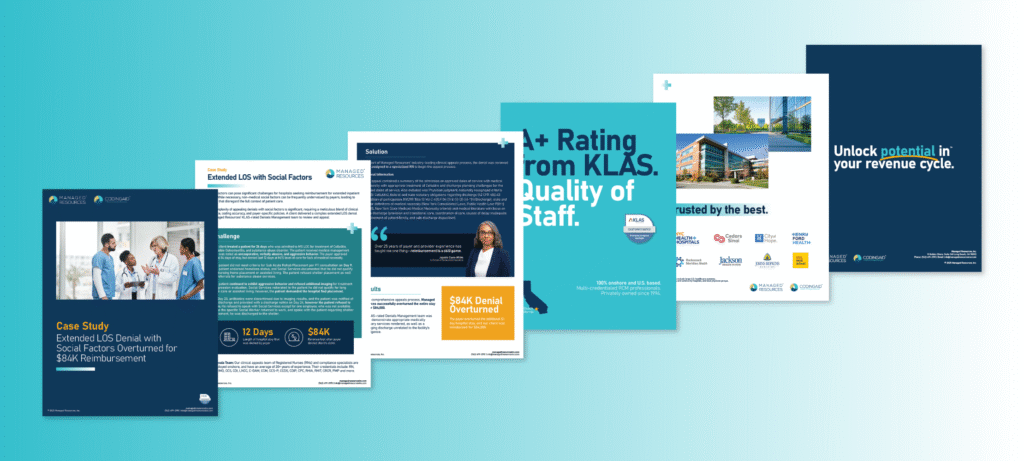
Case Study: Extended Length‑of‑Stay Denial with Social Factors Overturned for $84K Reimbursement
The following case study illustrates how comprehensive documentation of social determinants, paired with a strategic appeals process, can directly impact reimbursement outcomes and recover revenue lost to inappropriate denials.
Overview
- Patient admitted for 26 days to a medical/surgical (M/S) level of care for cellulitis, possible osteomyelitis, and substance use disorder.
- Initial 14 days approved, but last 12 days denied by payer for lack of medical necessity despite social barriers affecting discharge.
Challenge
- Clinical appropriateness for discharge was documented – but social determinants interfered:
- Patient was homeless and ineligible for nursing home or assisted living.
- He refused both shelter placement and substance abuse referrals.
- Behavioral issues—verbal aggression and uncooperativeness, refusal of further imaging—hindered safe discharge.
- Despite discharge notice on Day 24, the patient refused to leave, delaying discharge until a specific social worker intervened.
Approach
- Managed Resources’ specialized RN appeals team crafted a comprehensive appeal. Key elements included:
- A summary of approved services and clinical treatment during the denied period.
- Inclusion of physician judgment, along with nationally recognized criteria (e.g., MCG for cellulitis), and federal/state legal obligations concerning discharge (e.g., 42 CFR 482.43, New York regulations).
- Documentation of payer definitions of medical necessity and supporting medical literature regarding safe discharge, care coordination, and known causes of discharge delay.
Results
- Appeal successfully overturned, resulting in full reimbursement for the denied stay—over $84,000 recovered.
Common SDOH Contributing To Clinical Denials
Medical necessity denials often stem from perceived failures in post-acute care planning or care coordination. When patients lack caregiver support, safe discharge plans, or access to follow-up services, providers may struggle to justify extended stays or specific interventions. Payers that are focused on evidence-based justification, may deny claims when discharge barriers are not thoroughly documented. For RCM professionals, this highlights the need for thorough, SDOH-informed documentation and a proactive denial prevention strategy. Common social factors contributing to denials include:
- Lack of caregiver support: Inability to coordinate post-acute care
- Impact: Unsafe discharge environments, inability to manage medications or mobility
- Denial Risk: Denials for inpatient days or post-acute care when safe discharge isn’t documented
- Transportation barriers: Missed appointments or delays in diagnostics
- Impact: Missed appointments, delays in diagnostics or procedures, fragmented car
- Denial Risk: Insufficient documentation of patient compliance or continuity of care.
- Housing instability: Inconsistent access to treatment or medication
- Impact: Inability to adhere to treatment, difficulty managing chronic conditions, discharge planning challenges
- Denial Risk: Denials for extended inpatient stays without clear medical justification
- Language barriers: Miscommunication or incomplete patient histories
- Impact: Miscommunication in patient history, misunderstanding of treatment plans, missed consent/documentation
- Denial Risk: Incomplete or inaccurate documentation of patient condition or compliance
- Food insecurity: Non-adherence to dietary-based treatment plans
- Impact: Non-adherence to treatment plans (e.g., diet-related), skipped medications
- Denial Risk: Perception of non-compliance or lack of improvement
Without documentation of these circumstances, payers may misinterpret care patterns as unnecessary, excessive, or non-compliant.
KLAS-Rated Partners to Help You Navigate Complex Denials with Social Factors
Managed Resources’ KLAS-rated Clinical Appeals team of Registered Nurses (RNs) and compliance specialists are employed onshore, and have an average of 20+ years of experience. Their credentials include: RN, NP, IMG, CCS, CDI, LNCC, C-DAM, CCM, CCS-P, CCDS, CDIP, CPC, RHIA, RHIT, CRCR, PMP and more.
Managed Resources provides dual perspective, with appeals experts that hold both provider and payer experience, to act as an true problem-solving extension of your team when dealing with complex denials with social factors.
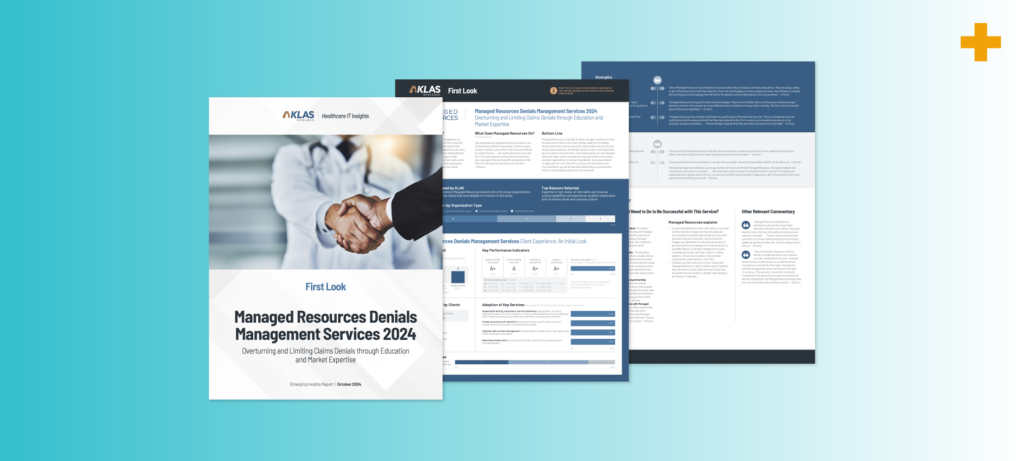
In our KLAS Emerging Insights Report, we received a 94.4% Overall Performance Score on our Denials Management Services, outscoring the average Overall Performance Score of Best in KLAS Denials Management average of 91.2%.
100% of Managed Resources’ Denials Management clients reported that they would buy our services again. We proudly received A+ Ratings in the following key performance indicators:
- Quality of Staff: A+
- Strength of Partnership: A+
- Likely to Recommend: A+
To learn more about Managed Resources’ KLAS Rated Clinical Appeals & Denials Management Services, please contact us here.
To learn more about Managed Resources recent $60M denials contract with New York Health + Hospitals, please click here.
To schedule a free Denials Management Assessment, contact us here.