

Medical coding is at the heart of every revenue cycle operation. It ensures accurate reimbursement, compliance, and clinical data integrity. But even with experienced teams and robust systems in place, errors and inefficiencies exist, impacting revenue, increasing audit risk, and compromising patient record accuracy.
Whether you’re a large health system or a mid-size provider group, the right medical coding audit at the right time can be the difference between ongoing success and costly setbacks.
What Is a Coding Audit?
A coding audit is a comprehensive review of medical coding accuracy, documentation practices, and compliance with payer and regulatory guidelines. These audits help ensure that coding reflects the actual services rendered and that documentation supports billed services.
Types of Coding Audits:
There are several types of coding audits, each serving a unique purpose.
- Retrospective Audits: Review coding after claims have been submitted to identify errors and trends.
- Concurrent Audits: Conducted in real-time or near-time during the coding process to catch issues early.
- Compliance Audits: Focus on regulatory adherence, targeting risk areas like upcoding, unbundling, and documentation integrity.
- Internal Audits: Initiated by the organization, often as part of quality assurance.
- External Audits: Performed by third-party partners for an objective evaluation and regulatory benchmarking.
Common Findings in Coding Audits:
Common findings during audits often include undercoding, where services are not fully captured and revenue is left on the table, and overcoding, which can trigger payer audits or even allegations of fraud. Repetitive or copied documentation – often referred to as “cloned notes”, is another frequent issue, reflecting either workflow shortcuts or a lack of documentation training. In many cases, the root causes of these findings are tied to gaps in coder education, unclear documentation from providers, EMR usability issues, or a lack of alignment between coding practices and updated payer policies.
- Undercoding: Missed revenue opportunities due to insufficient code assignment.
- Overcoding: Risk of audits, fines, or accusations of fraud due to exaggerated code selection.
- Copy + Pasted Documentation: Repetitive notes that don’t reflect individualized patient care.
- Root Causes: Often trace back to inconsistent training, evolving payer guidelines, EMR limitations, or unclear documentation standards.

Case Study – Large U.S. Health System
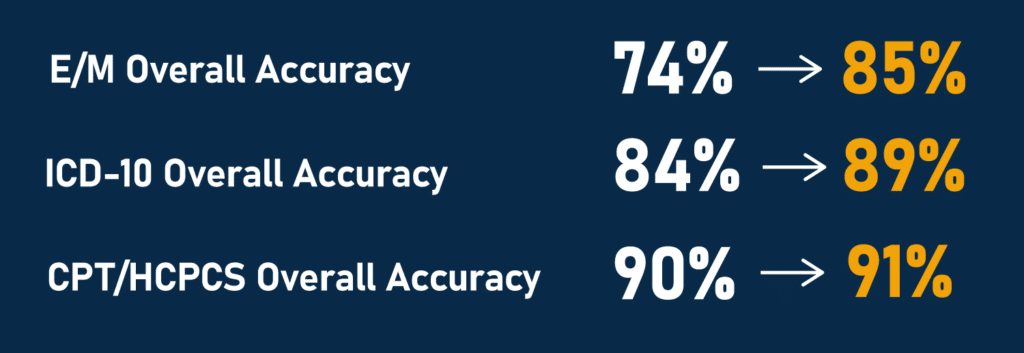
CodingAID recently conducted a comprehensive coding audit for a large U.S. health system with over 2,000 beds. By partnering with CodingAID to perform a compliance coding audit on its offshore coding vendor, our client uncovered critical recurring coding and documentation mistakes.
After its compliance audit, our client significantly improved overall accuracy rates across all 3 code categories: E/M, ICD-10, and CPT/HCPCS, and strengthened its coding practices with post-audit education and prevention training.
View coding audit case study here.
Signs It’s Time for a Coding Audit
Recognizing when it’s time for a coding audit often starts with noticing shifts in your revenue cycle metrics or compliance environment.
Common indicators that it’s time to evaluate conducting a coding audit:
- Declining Reimbursement Rates
- Increase in Payer Denials
- New Coding Guidelines
- High Staff Turnover
- Expansion or M&A Activity
- Aging AR and Rebilling Trends
One of the most telling signs is a decline in reimbursement. If your average revenue per encounter or diagnosis-related group (DRG) is trending downward without a clear clinical reason, inaccurate coding may be responsible.
An uptick in payer denials, particularly those citing coding errors or lack of medical necessity, is another red flag. These denials can be symptoms of systemic issues in coding accuracy or documentation completeness. If your organization is navigating new regulatory expectations or recently implemented guideline changes, such as updates to ICD-10, CPT, or E/M requirements, a coding audit can help assess whether your teams are keeping pace with changes.
Staff turnover, within your coding department or among providers, is another indicator that it’s time to assess. New team members may bring inconsistent habits or lack the training needed to maintain compliance. Organizations undergoing growth, mergers, or acquisitions should also consider audits to ensure coding consistency across multiple sites or systems.
Even operational indicators – like an aging accounts receivable, frequent rebilling of claims, or an increase in write-offs, can trace back to preventable coding errors. And for health systems engaged in value-based care or risk-sharing arrangements, the accuracy of coding directly impacts reimbursement and risk adjustment, making regular audits not just useful but essential.
How to Get Started with a Coding Audit
Once you’ve recognized the need, launching a coding audit is key to achieving results. Getting started with a coding audit involves selecting the right partner, preparing your team, and setting up the process for long-term success.
What to Look for in a Partner:
Choosing an audit partner starts with expertise. Look for a firm that brings certified coders, ideally AAPC or AHIMA-certified, with direct experience in your specialties and a strong grasp of payer-specific nuances.
At Managed Resources and CodingAID, our professional coding and audit experts are highly qualified to report and educate on coding guidelines, documentation best practices and more. Our multi-credentialed specialists average 10+ years of auditing experience, and are certified in CPC, CCS, CCS-P, CDIP, CCDS, RHIA, RHIT, CPC, COC, RN, LVN and more.
- Specialized Expertise: Choose a firm with AHIMA or AAPC-certified professionals who understand your specialty and payer mix.
- Human-Centered Approach: Beyond algorithms, coding accuracy requires clinical nuance—look for a team that blends technology with human insight.
- Customized Audit Plans: One-size-fits-all doesn’t work. You need a partner who tailors scope, sample selection, and reporting to your goals.
While technology is important, the best partners balance automation with deep human insight. You want a team that not only identifies issues but also understands the clinical and operational context behind them. A tailored approach is key – your audit plan should be customized to your organization’s goals, risk areas, and patient populations.
Preparing for the Audit:
Preparation on your side begins with aligning on your audit objectives. Are you focused on compliance, revenue optimization, or documentation quality? Make sure stakeholders across coding, billing, and clinical teams understand the audit’s purpose and are engaged in the process.

Post-Audit Best Practices:
Once the audit is complete, the work doesn’t stop. A high-quality audit report should offer more than just error rates – it should break down trends, identify root causes, and offer clear, prioritized recommendations. Use these insights to drive targeted coder or provider training, refine documentation workflows, and improve internal QA processes. Many successful organizations incorporate quarterly or biannual audits into their compliance strategies, ensuring they catch problems early and build a culture of accountability and excellence.
- Actionable Reporting: Your audit report should clearly highlight trends, root causes, and specific recommendations.
- Education & Training: Remediate findings with targeted coder and provider education – including CodingAID’s Coding Mentorship program.
- Ongoing Monitoring: Consider implementing periodic or quarterly audits as part of a proactive compliance strategy.
CodingAID
At CodingAID, we help health systems leverage coding audits not just to uncover issues, but to create lasting solutions. With expert coders, compliance specialists, and a commitment to client success, we’re ready to be your partner in coding excellence.
Whether you’re looking to improve cash flow, ensure compliance, or strengthen your documentation practices, the right audit, at the right time, can provide invaluable clarity, course correction, and significant short and long-term value.
To learn more about Managed Resources & CodingAID’s Coding Audit Services, please contact us here.