

Denials are a natural occurrence in today’s healthcare reimbursement landscape. While some denials can be appealed and overturned through traditional processes, some complex cases are deemed “unappealable” – and discarded by health systems who don’t see recourse for proper reimbursement.
At Managed Resources, our KLAS Rated team specializes in helping health systems manage and overturn the most comprehensive, unappealable denials. In this blog, we’ll explore the root causes of unappealable denials, the broader impact on healthcare operations, and how partnering with an expert RCM consulting firm can protect your bottom line and unlock potential in your revenue cycle.
Common Causes of Unappealable Denials
Lack of Medical Necessity
Physician documentation serves as the critical foundation for demonstrating medical necessity. To ensure payers understand the reason behind a patient’s admission, it’s essential to provide comprehensive and precise details about the clinical condition being addressed. This includes a thorough explanation of the patient’s symptoms, the diagnostic evaluation performed, and the treatment plan proposed.
- Incorrect: “ED Course: …Patient transfused 1 unit pRBC (or symptomatic anemia)… Patient reports feeling better… MCV notable to be elevated. No notable signs of acute bleeding. Less likely to be colon cancer given recent normal colonoscopy per patient. Folate/B12 wnl (drawn after blood transfusion)…low concern for GI source of bleeding at this time; however, if cbc shows hgb drop low threshold to consult.”
- Correct: Patient History + Risks + Concerns = Complexity/Inpatient Medical Necessity
Clarity in documentation plays a significant role in the payer decision-making processes. When there are vague or overly general terms used to explain the rationale for admission, it can lead to misunderstandings and challenges in justifying the necessity of care. Additionally, contradictions among different providers within the medical record can create confusion and may weaken the case for coverage.
- Incorrect: “Inpatient care is medically necessary due to the acuity and/or severity of the patient’s presentation, the need for advanced diagnostics and/or extended evaluation, the intensity of nursing and/or hospital resources anticipated, and the clinical complexity introduced by the patient’s comorbidities.”
- Correct: Specificity in physician documentation addressing risks and concerns: Increased X levels / Abnormal X findings / Concerning for X in the setting of X, etc.
Additionally, gaps in the documentation that outline the progression of care can further hinder the appeal process for any denied claims. To enhance the chances of a successful outcome when appealing denials, it is crucial to offer a cohesive, well-documented narrative that accurately reflects the patient’s clinical picture and the justification for their admission.
- Incorrect: Admission on a Friday. No progress notes on Saturday or Sunday with discharge on Monday morning.
- Correct: Daily Documentation or capture of clinical picture during the days lacking progress notes in the discharge summary or summarized in next note.

Coding Errors
Accurate assignment of codes and thorough clinical validation are essential components in effectively defending against claim denials. Frequent issues that can significantly hinder the ability to successfully appeal these denials include “rule out” scenarios, missed clinical validation opportunities, and sequencing. Coding conditions that were ruled out or resolved prior to the patient’s admission can complicate the ability to appeal. It is vital to ensure that coding aligns with patient conditions that are present during the encounter and impacted patient care (was monitored, evaluated, assessed, and/or treated).
Assigning the correct Principal Diagnosis for the encounter can also be a challenge, especially if the provider indicated multiple conditions caused the admission. In such situations, it is the coder’s responsibility to follow Official Guidelines for Coding and Reporting Section II.B and II.C to assigned the condition that best represents the resources utilized during the encounter. There are often missed opportunities to seek clarification or acquire additional information regarding documented medical conditions. Coders must proactively query providers and be diligent in following up to obtain the necessary details that could affect the coding and ultimately the reimbursement.
Incorrect assignment and sequencing of impactful codes can also prevent an appeal opportunity. It is important to assign codes accurately based on clinical information and to ensure they are sequenced appropriately to reflect the patient’s primary and secondary diagnoses accurately.
Missed Filing Deadline
Preservation of appeal rights is important in denials. Most payers have very specific guidelines for the appeal process. Adhering to these guidelines and ensuring timely submission of appeals lends to quicker resolution and payment. Understanding these causes is critical to developing preventative strategies and improving first-pass resolution rates.
The Impact of Unappealable Denials
Loss of Reimbursement
The most direct impact of unappealable denials is revenue loss. Even small percentages of uncollectible claims can represent millions in lost revenue for large health systems over time. When a denial is deemed “unappealable”, it can result in a unnecessary forfeiture of expected revenue – essentially turning a billable service into an uncompensated cost.
Since denials often stem from preventable issues, such as documentation gaps or late submissions, they represent a missed opportunity to convert already-rendered care into reimbursed revenue.
Operational Inefficiency & Strain on Patient Care
Denied claims force staff to spend valuable time tracking, reviewing, and documenting cases – only to discover additional roadblocks. This wasted effort includes difficulty managing increased write-offs, and trouble determining whether accounts were truly appealable – both resulting in increased administrative costs and decreased productivity. Revenue losses impact clinical budgets, staffing, and ultimately, the quality of patient care. Financial constraints can hinder investment in new technology, staff training, and patient-centered initiatives.
Regulatory & Compliance Risks
High rates of denials may trigger audits or compliance reviews from regulatory bodies and commercial payers, exposing systems to additional penalties.

Finding the Right Partner to Manage Unappealable Denials
Why Outsource Unappealable Denials?
Outsourcing unappealable denials to a KLAS Rated RCM consulting firm brings deep expertise in appeals and denials management, ensuring that nuanced payer requirements and clinical documentation standards are navigated with precision. This approach enhances efficiency and flexibility, enabling health systems to scale resources based on denial volume without overburdening internal teams or compromising turnaround times. By leveraging proven workflows and targeted interventions, outsourcing also drives significant cost savings through improved recovery rates and reduced administrative overhead.
What to look for in a partner?
When selecting a partner to manage complex denials, health systems should prioritize firms with deep clinical and payer-specific expertise, as well as a commitment to delivering high-quality, data-driven results. A strong partner offers scalable solutions that adapt to fluctuating denial volumes, maintains transparent and proactive communication, and integrates seamlessly with internal teams to support long-term success.
Most importantly, look for a firm with a proven track record of recovering revenue for large, complex health systems – demonstrating their ability to deliver measurable impact at scale.
Managed Resources recently inked a $60M denials contract with New York Health + Hospitals.
Our KLAS Rated Denials Team
Our KLAS Rated Clinical Appeals team of Registered Nurses (RNs) and compliance specialists are employed onshore, and have an average of 20+ years of experience. Their credentials include: RN, NP, IMG, CCS, CDI, LNCC, C-DAM, CCM, CCS-P, CCDS, CDIP, CPC, RHIA, RHIT, CRCR, PMP and more.
Managed Resources provides dual perspective, with appeals experts that hold both provider and payer experience, to act as an true problem-solving extension of your team.
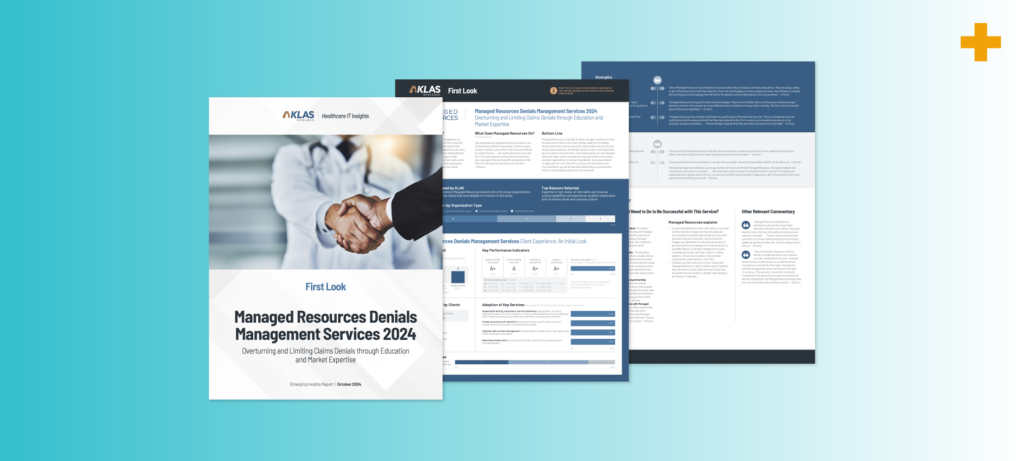
In our KLAS Emerging Insights Report, we received a 94.4% Overall Performance Score on our Denials Management Services, outscoring the average Overall Performance Score of Best in KLAS Denials Management average of 91.2%.
100% of Managed Resources’ Denials Management clients reported that they would buy our services again. We proudly received A+ Ratings in the following key performance indicators:
- Quality of Staff: A+
- Strength of Partnership: A+
- Likely to Recommend: A+
About Managed Resources, Inc.
Unappealable denials represent a significant risk to financial health, operational efficiency, and the delivery of patient care. Yet, many health systems lack the internal resources to effectively manage unappealable denials to recover proper reimbursement. At Managed Resources, we specialize in navigating unappealable denials and recovering proper reimbursement to protect your bottom line.
To learn more about Managed Resources’ KLAS Rated Clinical Appeals & Denials Management Services, please contact us here.
To schedule a free Denials Management Assessment, contact us here.